
Rust Stains in Your Pool — What’s Causing Them and How to Fix It Properly
If you’ve noticed brown or orange stains appearing on the walls or floor of your pool — especially around the waterline or near cracks — it’s not algae, it’s not mineral buildup, and it’s not something you can scrub off with acid and forget about.
It’s rust. And it’s coming from inside the pool shell.
What’s actually happening
Every concrete pool has a steel reinforcement cage inside it — rebar. When the pool was built, that rebar should have been fully encased in concrete, with enough cover (at least 3–4 cm) to protect it from water and chemicals.
But if the concrete cover is too thin, or if there’s a crack, or if the waterproofing was skipped — pool water reaches the steel. Chlorinated water is aggressive. It corrodes the rebar. As it rusts, the steel expands, which cracks the concrete further, which lets more water in. It’s a cycle that only gets worse.
The brown stain you see on the surface is dissolved iron oxide bleeding through from behind the tiles or render. By the time it’s visible, the damage has usually been progressing for years.
Why a quick fix won’t work
We get calls from people who’ve already tried acid washing, stain removers, even repainting the affected area. The stain comes back within weeks or months, because the source of the problem is structural — it’s behind the surface, not on it.
Covering rust stains with new tiles or render without addressing the rebar is like painting over damp. It looks fine for a while. Then it doesn’t.
How to do it properly
Step 1: Drain the pool and locate all affected areas. Rust stains on the surface tell you where to look, but the damage behind the surface is often wider than what’s visible. We mark everything, then work systematically.
Step 2: Open up the affected area. Remove tiles, render, or whatever finish is covering the concrete in the stained zones. Cut back until you reach the rebar and can see the full extent of the corrosion.
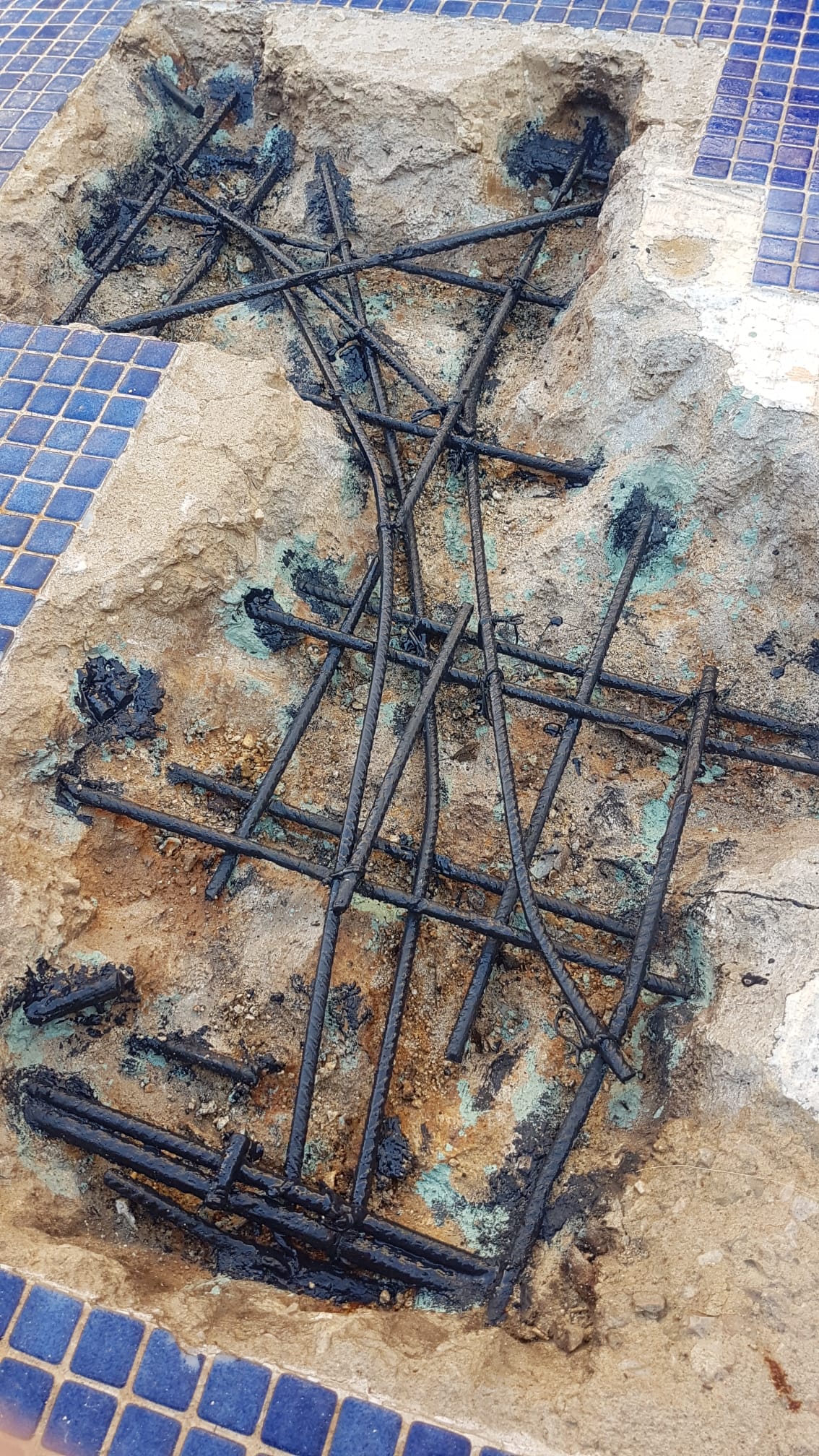
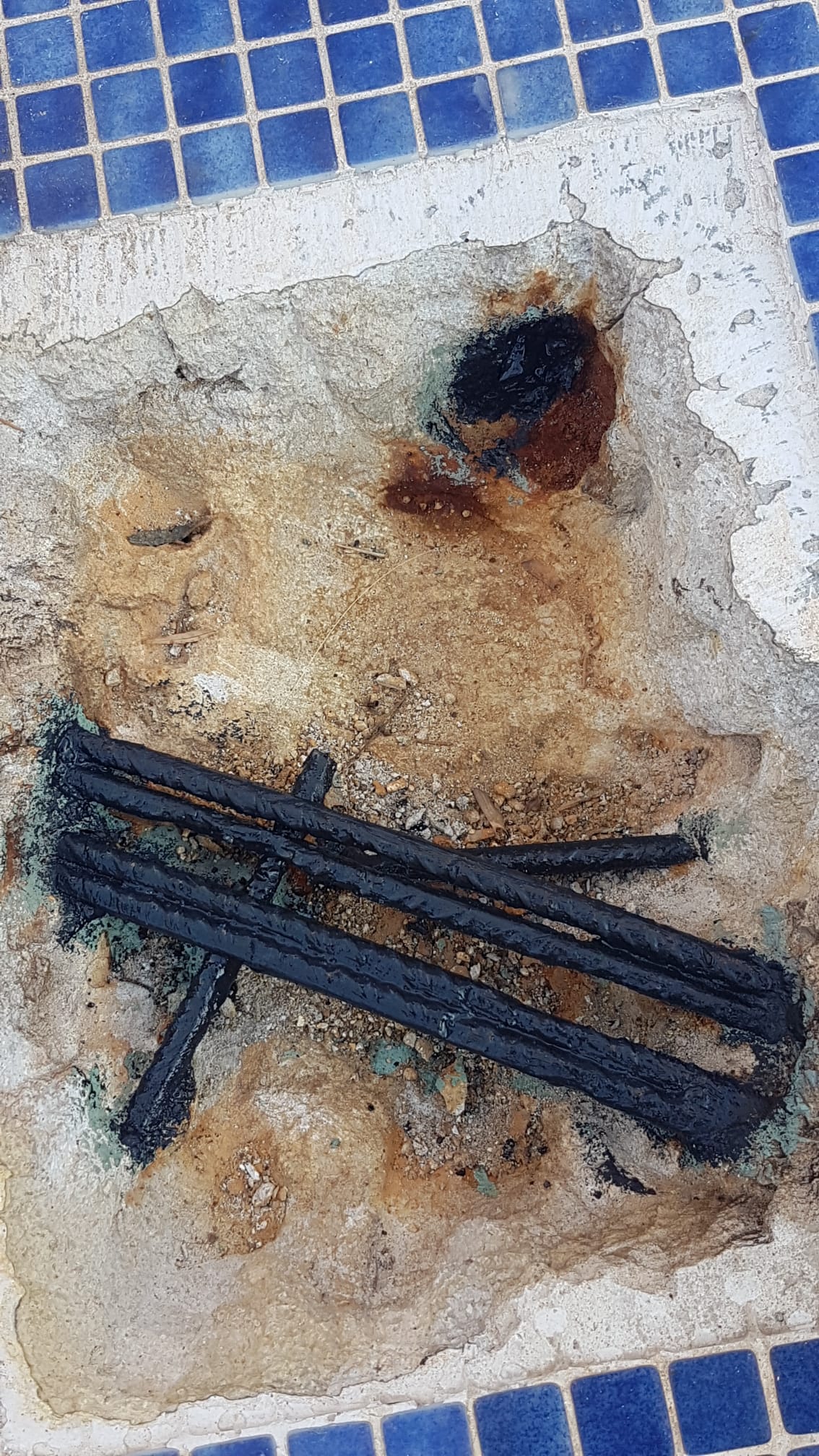
Step 3: Assess the rebar. If it’s surface corrosion, we clean it back to bright metal with a wire brush or grinder, then treat it with a rust-inhibiting primer designed for reinforcement steel. If a section has lost significant cross-section — meaning it’s corroded through or is paper-thin — it needs to be cut out and new rebar welded or tied in.
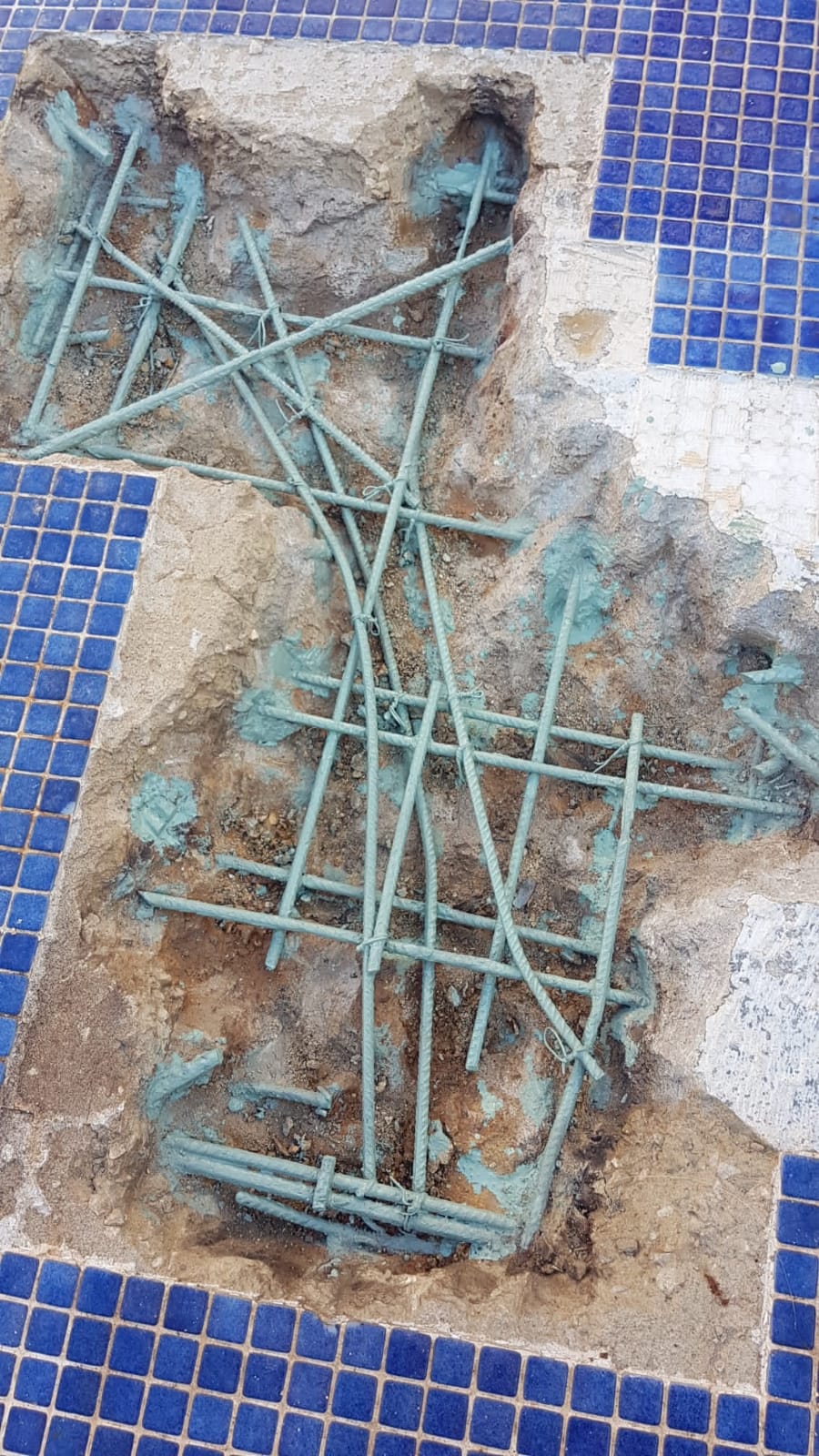
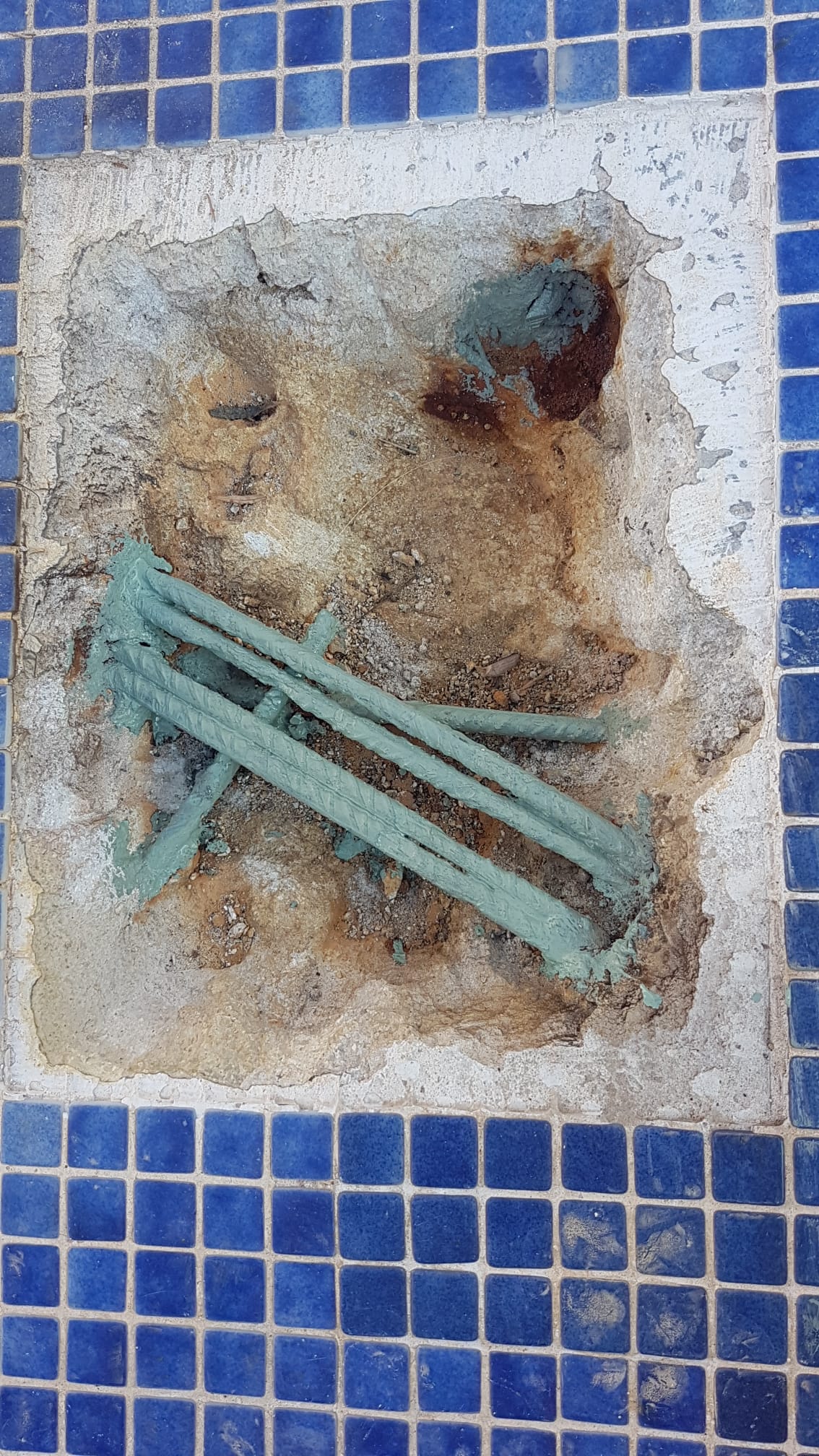
Step 4: Rebuild the concrete cover. Once the steel is treated, we rebuild the concrete cover using a repair mortar formulated for structural use in wet environments. This isn’t standard render — it bonds to the existing concrete and provides the alkaline environment that protects steel from further corrosion.
Step 5: Waterproof before you tile. Before any tiles go back on, the entire repaired area (and ideally the full pool interior) gets a proper waterproofing membrane. This is the step that was probably missing in the first place. A two-component cementitious membrane with reinforcing mesh, applied in two coats. It’s what stops water reaching the steel again.
A word on cost and expectations
This is not a cheap repair. You’re dealing with structural work in a wet environment, and it needs to be done properly or you’ll be doing it again in three years. Depending on the extent of the damage, you could be looking at anything from a localised patch repair to a full pool renovation.
But here’s the thing: if you catch it early — when there’s just one or two stains appearing — the repair is contained and manageable. Leave it, and the corrosion spreads. We’ve seen pools where every wall had active rust damage, and the entire shell needed to be stripped back and rebuilt from the reinforcement out.
If you’re seeing rust stains, don’t wait. It won’t stabilise on its own. Get it looked at, get a proper diagnosis, and deal with it while it’s still a repair rather than a rebuild.
Having pool problems?
Send us a few photos of what you’re seeing — we’ll tell you what’s going on and what it’ll take to fix it. No obligation.
Send photos via WhatsApp →